Botox for wrinkles is a commonly used, non-surgical option to reduce the appearance of dynamic lines caused by facial muscle movement. This article explains how Botox works, who may benefit, what to expect during and after treatment, common side effects, and alternatives. A consultation with a qualified provider can determine whether Botox may be appropriate for your goals and skin type.
How Botox for wrinkles works
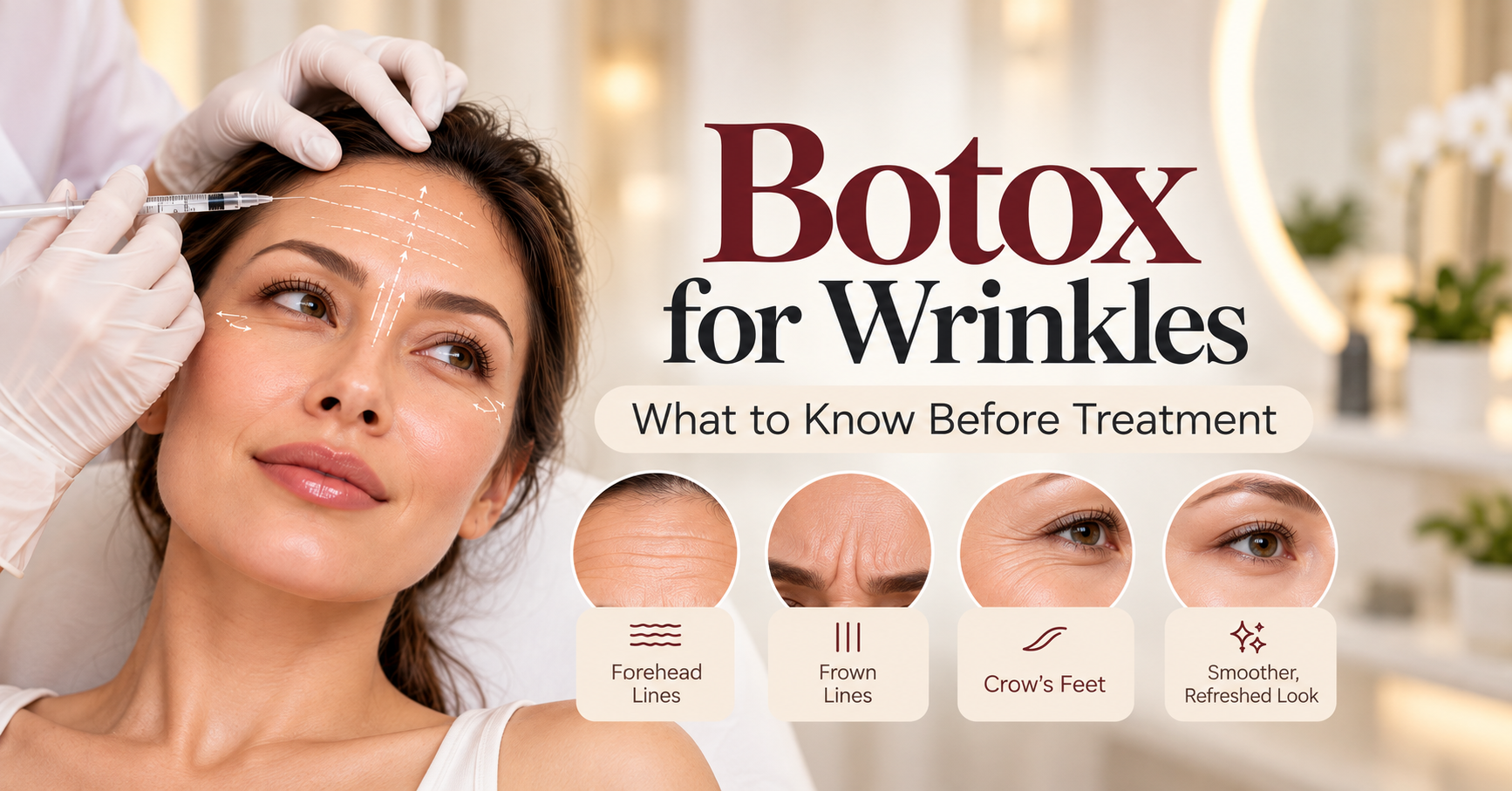
Botox is a purified neurotoxin that temporarily reduces muscle activity where it’s injected. For wrinkles, providers target muscles that cause lines when you frown, squint, or raise your eyebrows. By relaxing those muscles, the overlying skin can appear smoother and lines become less noticeable. Effects typically begin within a few days and develop over one to two weeks.
Common treatment areas
- Glabellar lines (between the eyebrows)
- Forehead lines
- Crow’s feet (outer corners of the eyes)
- Other areas such as the bunny lines on the nose or neck bands, depending on assessment
What to expect during a Botox treatment
Treatments are usually performed in a clinic setting and take about 10–30 minutes depending on the number of areas treated. Your provider will assess facial movement and discuss your goals before marking injection sites. A fine needle is used for injections; many patients describe mild pinching or stinging. No general anaesthesia is required, and most people return to normal activities immediately, with a few precautions.
Results and how long they last
Noticeable improvement in dynamic wrinkles often appears within 3–7 days and reaches peak effect around two weeks. The duration of effect varies by individual but commonly lasts three to four months. Factors that influence longevity include dosage, treated muscles, metabolism, and frequency of prior treatments. Maintenance sessions can help sustain results.
Safety and possible side effects
Botox is generally well tolerated when administered by a trained, licensed provider. Common, temporary side effects include:
- Mild bruising or swelling at injection sites
- Headache
- Temporary localized weakness of nearby muscles
Less common effects can include asymmetry or drooping of nearby areas (for example, a drooped eyelid). These outcomes are typically temporary but underscore the importance of an experienced injector who understands facial anatomy. Discuss your medical history, medications, and any neuromuscular conditions with your provider, as these can affect suitability and safety.
Who may be a good candidate?
People with visible dynamic lines that appear with facial expressions and those seeking a non-surgical approach may consider Botox. It may be less effective for deep static wrinkles that are present at rest; in those cases, a combination approach (for example, neuromodulators plus dermal fillers or skin resurfacing) may be discussed. A consultation with a qualified clinician helps determine the right plan based on skin type, concerns, and medical history.
Preparing for treatment and aftercare
Before treatment, your provider will review your medical history and may advise temporarily pausing certain medications or supplements that increase bleeding risk (such as aspirin, NSAIDs, or high-dose fish oil) if clinically appropriate. On the day of treatment, arrive with a clean face and follow any pre-appointment instructions.
Aftercare tips commonly recommended:
- Avoid rubbing or massaging the treated areas for 24 hours
- Remain upright for several hours following injections
- Avoid strenuous exercise and excessive heat (sauna, hot yoga) for 24–48 hours
- Avoid alcohol for 24 hours to reduce bruising risk
If you experience unexpected or severe symptoms—such as difficulty breathing, swallowing, or major swelling—seek medical attention promptly.
Alternatives and complementary treatments
Botox addresses dynamic lines caused by muscle movement. For other concerns, providers may suggest:
- Dermal fillers for volume loss and deeper static folds
- Laser or microneedling for skin texture and collagen stimulation
- Topical medical-grade skincare for pigmentation and surface quality
Often, a combination approach offers the most natural and balanced results. Your provider can recommend a tailored plan during consultation.
Frequently asked questions
Will Botox for wrinkles make my face look frozen?
When dosed and placed appropriately by an experienced clinician, Botox aims to soften lines while preserving natural facial expressions. Discussing your aesthetic goals and showing photos of the look you prefer helps your provider tailor treatment.
How soon can I see results and when should I plan a follow-up?
Initial effects often appear within a few days and peak at about two weeks. A follow-up (touch-up) appointment may be scheduled around two weeks after treatment if minor adjustments are needed.
Is Botox painful?
Most patients report only mild discomfort during injections. Providers use fine needles and techniques to minimize pain; topical numbing is rarely required for typical facial Botox treatments.
Can I combine Botox with other treatments?
Yes. Botox is commonly combined with dermal fillers, lasers, or skin treatments to address multiple concerns. Timing and sequencing depend on the specific procedures; your provider will advise on a safe and effective plan.
How do I choose a provider?
Choose a licensed medical professional with specific training and experience in cosmetic injectables. Look for before-and-after photos, patient reviews, and a thorough consultation process that includes medical history and realistic expectations.
If you’re in Toronto or North York and considering Botox for wrinkles, our clinic provides consultations to review your goals and create a personalized plan. Contact Perfection Cosmetic Clinic to book a consultation and discuss whether Botox may be appropriate for you.