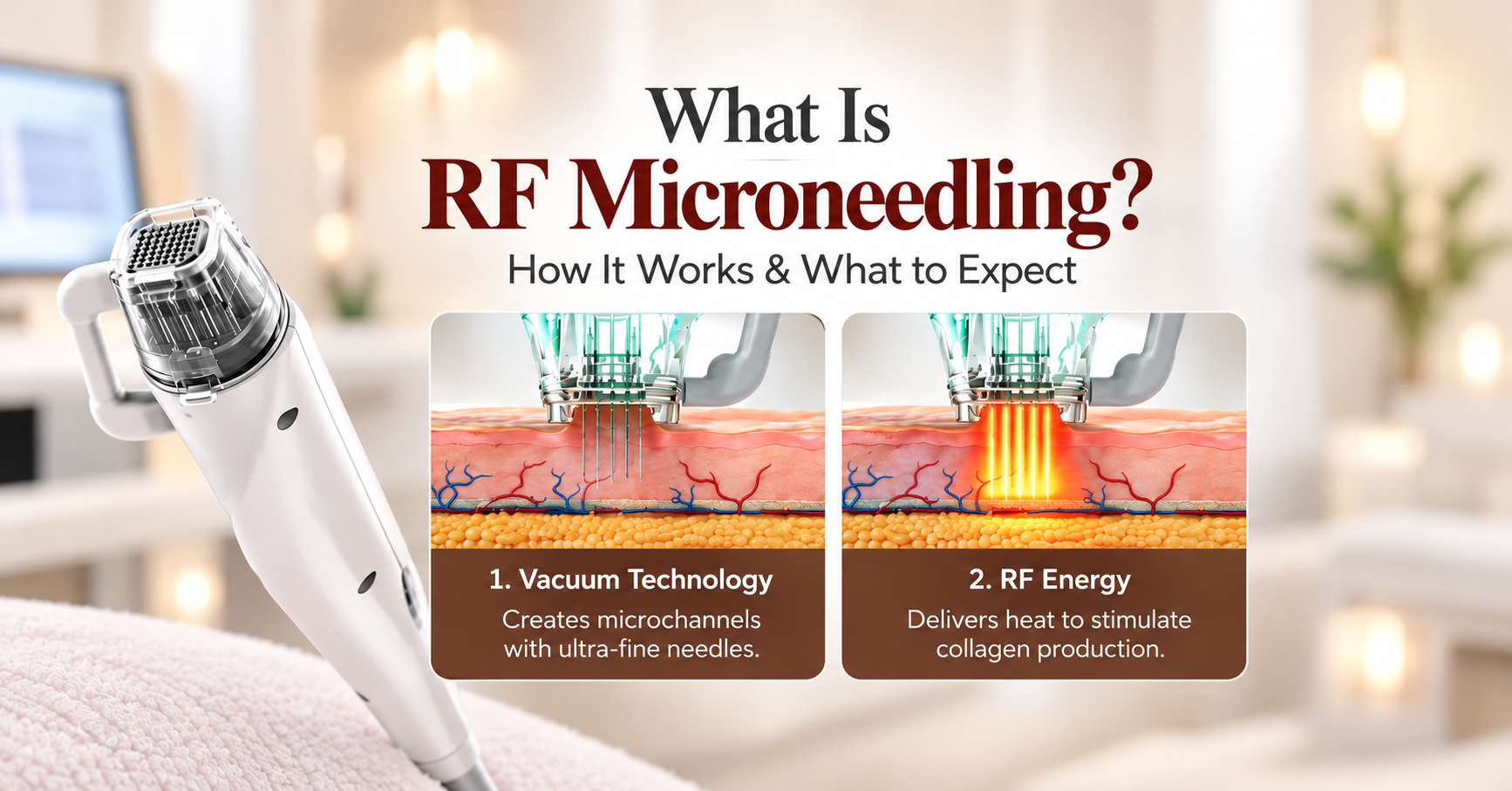




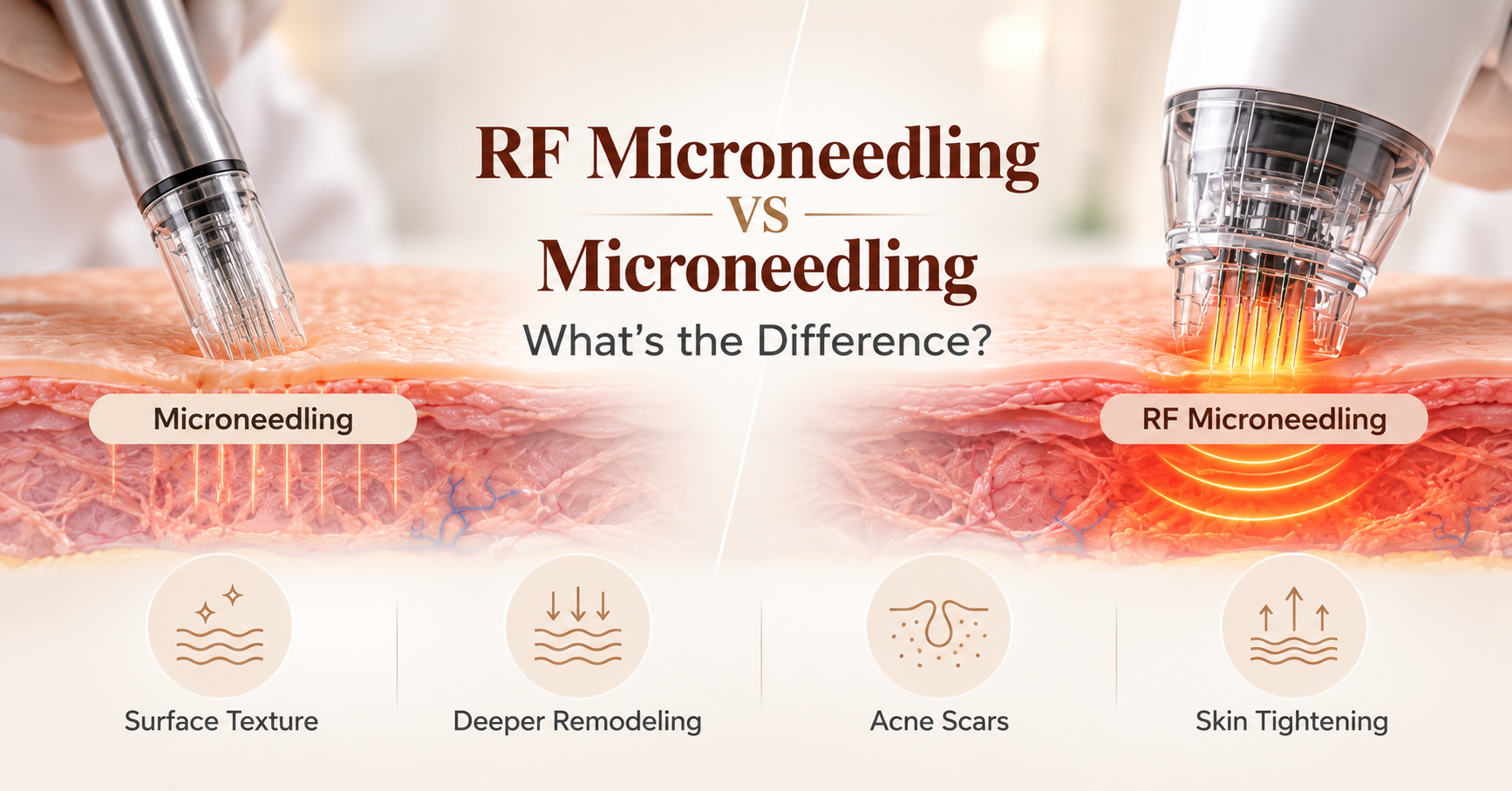
When comparing RF microneedling vs microneedling, the main difference is the addition of radiofrequency (RF) energy. Both use controlled skin injury to stimulate collagen and improve texture, but RF microneedling delivers heat beneath the surface for added tissue tightening and deeper remodeling. This article explains how each treatment works, typical uses, recovery expectations, and how to decide which may be right for your skin goals.
Traditional microneedling (often called collagen induction therapy) uses tiny sterile needles to create microchannels in the skin. These micro-injuries trigger a wound-healing response that stimulates collagen and elastin production, improving fine lines, enlarged pores, and superficial scarring over time.
RF microneedling combines the mechanical micro-injury of needles with radiofrequency energy delivered through those needles into deeper skin layers. The RF heat promotes collagen contraction and remodeling at controlled depths, which can enhance tightening and improve deeper wrinkles and laxity more effectively than microneedling alone.
Both treatments rely on gradual collagen remodeling. Early improvement in skin texture and radiance may be visible within a week, but meaningful tightening and scar remodeling usually develop over several months as collagen matures. Results vary depending on individual factors such as age, skin condition, lifestyle, and treatment parameters. Maintenance sessions may be recommended to sustain improvements.
Traditional microneedling is widely considered safe for many skin tones because it primarily affects the epidermis and superficial dermis. RF microneedling may be advantageous for darker skin types compared with some resurfacing lasers because RF energy delivered beneath the surface reduces direct epidermal heat and the associated pigment risk. Nevertheless, both treatments require a qualified provider familiar with treating diverse skin types to reduce risks such as post-inflammatory hyperpigmentation.
Certain medical conditions, active infections, or use of specific medications may affect suitability. A consultation with a licensed provider is necessary to determine individual candidacy.
For additional safety information, review Health Canada’s guidance on RF and energy-based medical devices.
The better option depends on your primary concern:
A qualified consultation can evaluate your skin, discuss realistic expectations, and recommend an appropriate plan. Sometimes a series of microneedling sessions, or combining microneedling with other noninvasive treatments, is the best approach to reach your goals.
Costs vary by clinic, device, and the number of sessions recommended. Rather than choosing based on price alone, consider provider experience, device quality, and a clear treatment plan tailored to your concerns. Perfection Cosmetic Clinic’s team can review options during a consultation and explain the likely course of treatment for your needs.
Learn more about our RF microneedling treatment, read our guide on what RF microneedling is, or book a consultation with our Toronto team.
RF microneedling often provides greater improvement for deeper or rolling acne scars because the RF energy stimulates remodeling at deeper dermal levels. However, superficial icepick scars may respond better to targeted procedures—an assessment will clarify which approach is appropriate.
Both treatments typically have short downtime. Traditional microneedling may produce slightly shorter redness and recovery in some cases, while RF microneedling can lead to modestly longer redness depending on settings. Your provider will discuss expected recovery based on the planned treatment depth and energy.
Both can be safe when performed by an experienced provider. RF microneedling can be advantageous for darker skin compared with certain lasers because RF energy targets deeper tissue with less epidermal heating, reducing pigment risk. Individual assessment is important.
There is no universal number. Many patients undergo a series of treatments spaced several weeks apart to achieve progressive improvement. A consultation helps set realistic expectations and a treatment schedule tailored to your concerns.
Yes. Both procedures are commonly combined with topical therapies, chemical peels, or noninvasive tightening treatments in a staged plan. Combining treatments can address multiple concerns, but sequencing and timing should be planned by your provider to maximize safety and outcomes.
To learn whether RF microneedling or traditional microneedling may be appropriate for your goals, consider scheduling a consultation with a qualified provider at Perfection Cosmetic Clinic in Toronto / North York. Our team will assess your skin, explain realistic expectations, and recommend a personalized plan.
