What is RF microneedling? RF microneedling is a minimally invasive aesthetic treatment that combines tiny needles with radiofrequency (RF) energy to stimulate the skin’s natural repair processes. This approach aims to improve texture, firm lax skin, and reduce certain types of scarring and wrinkles while stimulating collagen and elastin production.
What is RF Microneedling?
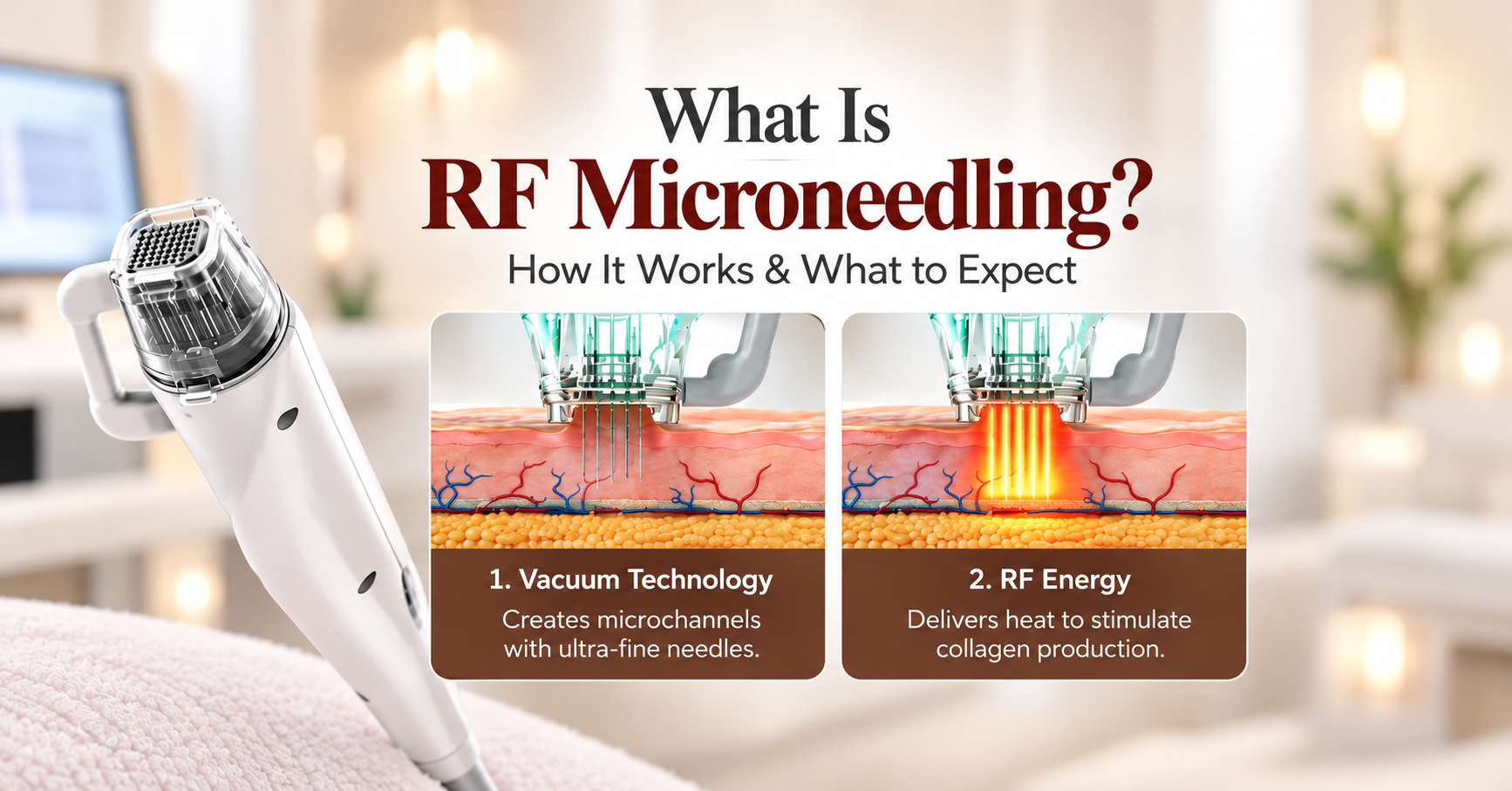
RF microneedling pairs controlled microscopic punctures—created by a handheld device—with targeted radiofrequency energy delivered beneath the skin surface. The mechanical injury from the needles and the thermal effect from RF work together to trigger wound-healing pathways. Over time, this can lead to thicker, more resilient dermal tissue and improved skin appearance.
How RF Microneedling Works
1. Mechanical micro-injury
Fine needles create microchannels in the epidermis and dermis. These micro-injuries are small and precise, which signals the body to begin a repair response without causing large-scale damage.
2. Radiofrequency energy delivery
At the same time, RF energy is delivered through the needle tips to the deeper dermal layers. The controlled thermal effect helps remodel collagen and elastin fibres and can tighten tissue in the treatment zone.
3. Natural healing and remodeling
The combination of controlled injury and heat stimulates cellular processes involved in collagen production and tissue remodeling. Over weeks to months, treated skin may appear firmer, smoother, and more even.
Common Uses and Benefits
- Skin texture and large pores: May improve rough texture and reduce pore appearance.
- Fine lines and mild wrinkles: Can soften lines, particularly around the lower face and neck.
- Acne scarring and surgical scars: Often used to reduce the appearance of certain types of scars by promoting dermal remodelling.
- Skin laxity: May help tighten mild to moderate laxity in areas such as the jawline and neck.
- Overall skin tone: Can improve irregularities in tone and surface quality.
Results vary depending on skin condition, treatment settings, and individual healing responses. A consultation with a qualified provider can clarify realistic expectations.
What to Expect During a Treatment
- Assessment: The provider evaluates your skin, medical history, and goals to determine whether RF microneedling is appropriate.
- Preparation: Topical numbing is commonly applied to improve comfort. Eyes and sensitive areas are protected.
- Procedure: The device is passed over the treatment area. You may feel pressure, warmth, or brief stinging with each pulse of RF energy.
- Post-procedure: The skin is cleansed and calming products or dressings may be applied.
Downtime and Recovery
Recovery with RF microneedling is typically short. Immediately after treatment you can expect redness, mild swelling, and a sensation similar to a sunburn. These effects generally improve over a short period, and most people resume regular activities shortly after treatment with appropriate aftercare. Individual recovery varies based on treatment intensity and personal healing.
Safety, Side Effects, and Suitability
When performed by a trained professional, RF microneedling is generally well tolerated. Common temporary effects include redness, swelling, pinpoint bleeding, and tenderness. Less common risks include infection, prolonged redness, pigment changes, or scarring—particularly if aftercare recommendations are not followed or if the skin has certain predispositions.
Candidacy depends on skin type, medical history, medications, and treatment goals. Some medical conditions or recent treatments may affect suitability. A qualified provider will review your history and advise whether RF microneedling may be appropriate.
For additional information about potential risks, review Health Canada’s RF microneedling safety information.
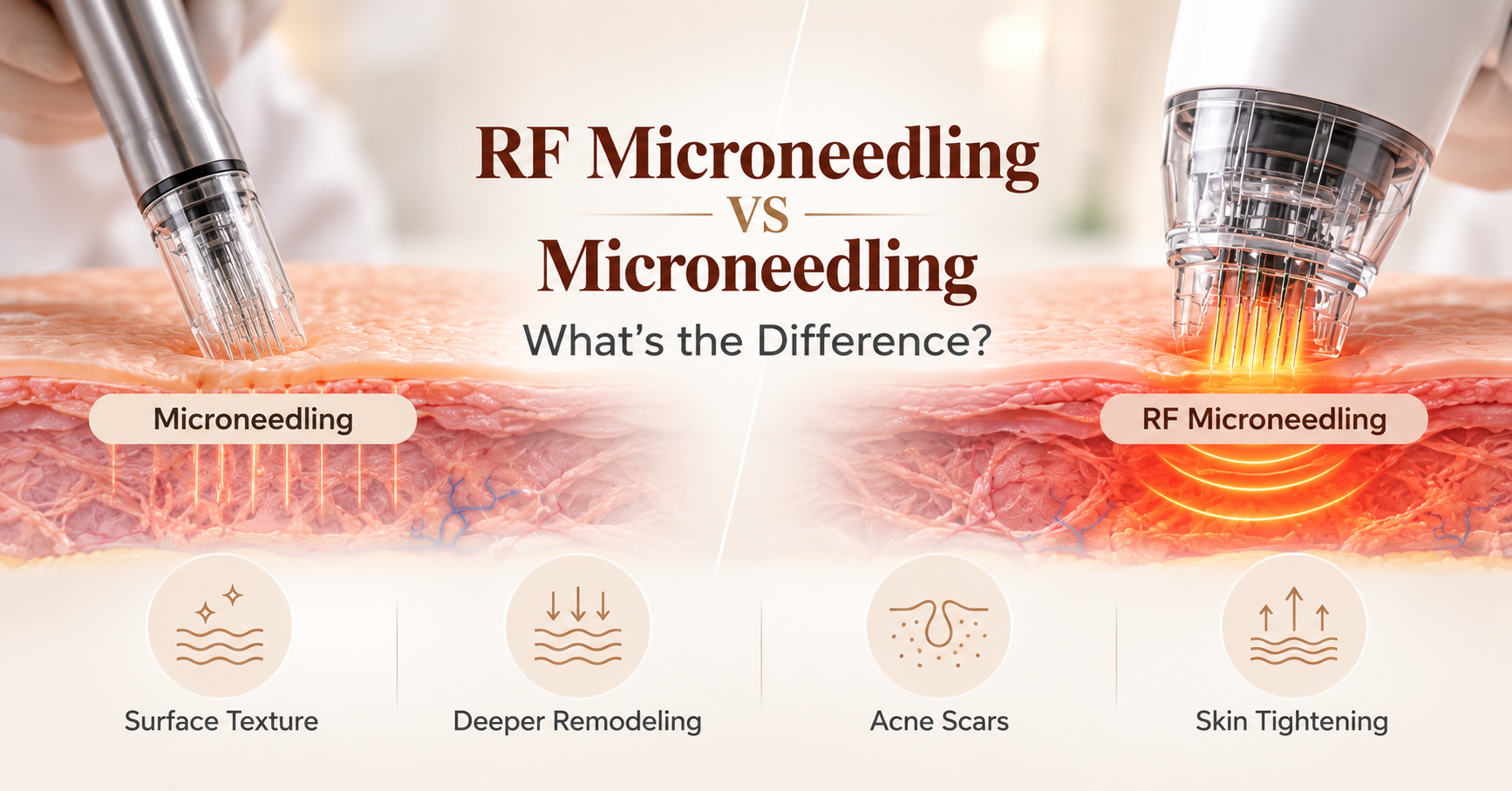
How RF Microneedling Differs from Traditional Microneedling
Traditional microneedling uses needles alone to create microchannels and stimulate collagen. RF microneedling adds thermal energy beneath the skin, which may enhance tissue tightening and collagen remodelling. Which option is better depends on the specific concern, skin type, and desired outcome; a consultation can determine the better fit.
Choosing a Provider
Select a licensed, experienced provider who works in a medical or regulated clinic setting. Ask about their training with RF microneedling devices, before-and-after photos for similar concerns, and how they manage safety and aftercare. Proper device settings and technique are important for effective and safe outcomes.
Frequently Asked Questions
How soon will I see results from RF microneedling?
Initial improvements in texture or tone may be noticed within a few weeks as the skin begins to heal. More visible changes from collagen remodeling often continue to develop over several months. Results and timing vary between individuals.
Is RF microneedling painful?
Most patients report manageable discomfort. Topical numbing is commonly used to reduce pain, and sensations of warmth or pressure are normal during the procedure.
Can RF microneedling be used on all skin types?
RF microneedling can be suitable for many skin types, but individual assessment is important. Some technologies and settings are better suited to particular skin tones and conditions; an experienced provider can tailor treatment accordingly.
How many sessions are typically recommended?
The number of sessions depends on the concern being treated, device settings, and individual response. Your provider will recommend a personalized plan during consultation rather than prescribing a fixed number without assessment.
Are there alternatives if RF microneedling isn’t right for me?
Depending on your goals, other options may include traditional microneedling, ablative or non-ablative resurfacing, injectable treatments, or surgical approaches. A provider can discuss alternatives and help select an approach aligned with your priorities.
To learn whether this treatment may be appropriate for your goals, consider scheduling a consultation with a qualified provider at Perfection Cosmetic Clinic in North York / Toronto. A thorough assessment can help determine suitability, expected outcomes, and a personalized treatment plan.